Every family has its own rhythm, routines and little ways of doing things.
Perhaps breakfast is always enjoyed before the children get dressed for school. Maybe Friday evening means pizza and a film, your youngest always chooses two stories before bed, or muddy shoes never make it beyond the entrance hall.
When these details are part of everyday family life, we hardly think about them. They simply become the way things are done at home.
For a new nanny, however, there can be a surprising amount to learn.
Even the most experienced professional nanny cannot instinctively know how your particular household works. She may have cared for children of the same age, travelled extensively with previous employers and worked in beautifully organised private homes, but every family is different.
This is where a nanny handbook can be incredibly helpful.
It does not need to be formal, complicated or filled with endless rules. Think of it instead as a friendly guide to your family, your children and your home. Somewhere your nanny can quietly check a detail rather than having to remember everything discussed during those busy first few days.
A thoughtfully prepared nanny handbook can help everyone start the relationship feeling a little more confident and comfortable.
Here are ten things we think are particularly useful to include.
1. Your Family’s Usual Routine
Start with the basics of everyday family life.
Include usual waking times, breakfast, school or nursery hours, naps, meals, activities, homework, bath time and bedtime.
You can also add the little details that make your routine run smoothly.
Perhaps school uniforms are laid out the evening before. Maybe swimming bags live permanently by the back door. Your child might need half an hour to relax after school before starting homework, or perhaps everyone sits together for dinner whenever possible.
These are the details that help a new nanny find her feet quickly.
There will naturally be days when everything changes. Children get invited to parties, parents travel, school finishes early and holidays rarely follow the normal routine.
The handbook is not there to make family life rigid. It simply gives your nanny a helpful starting point.
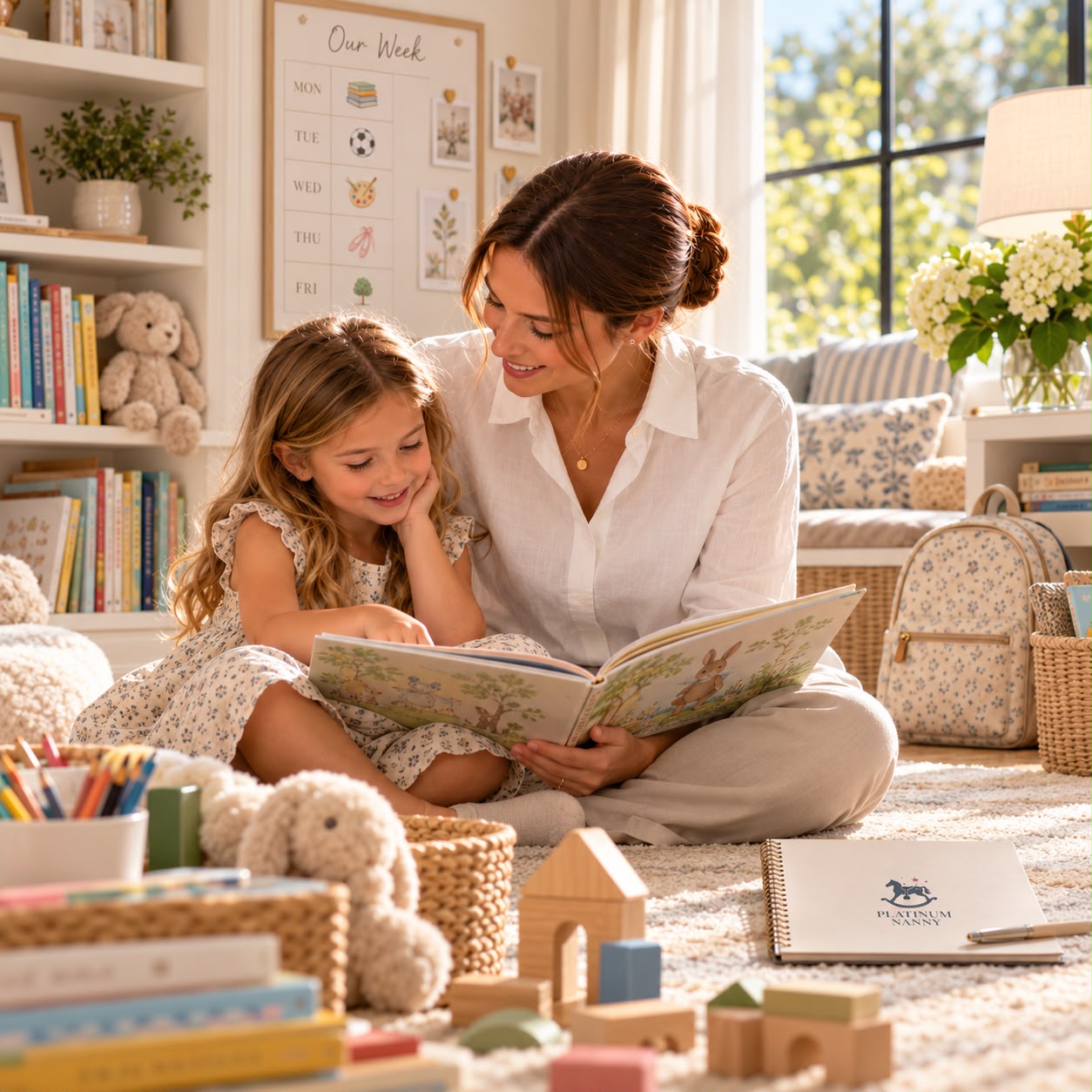
2. The Things That Make Your Child, Your Child
Schedules are useful, but understanding a child is about much more than knowing where they need to be at 4pm.
Tell your nanny about the things your children genuinely enjoy.
One child might happily spend an afternoon making elaborate Lego creations. Another may love horses, baking, dressing up, swimming or kicking a football around the garden.
Include favourite books, games, hobbies, comfort toys, favourite foods and anything that usually helps when they are tired or upset.
You can also mention things they dislike.
Perhaps your child finds very noisy places overwhelming, needs plenty of warning before plans change or becomes nervous around large dogs.
These small insights can give a nanny a wonderful head start in getting to know your child and finding activities they can enjoy together.
_____
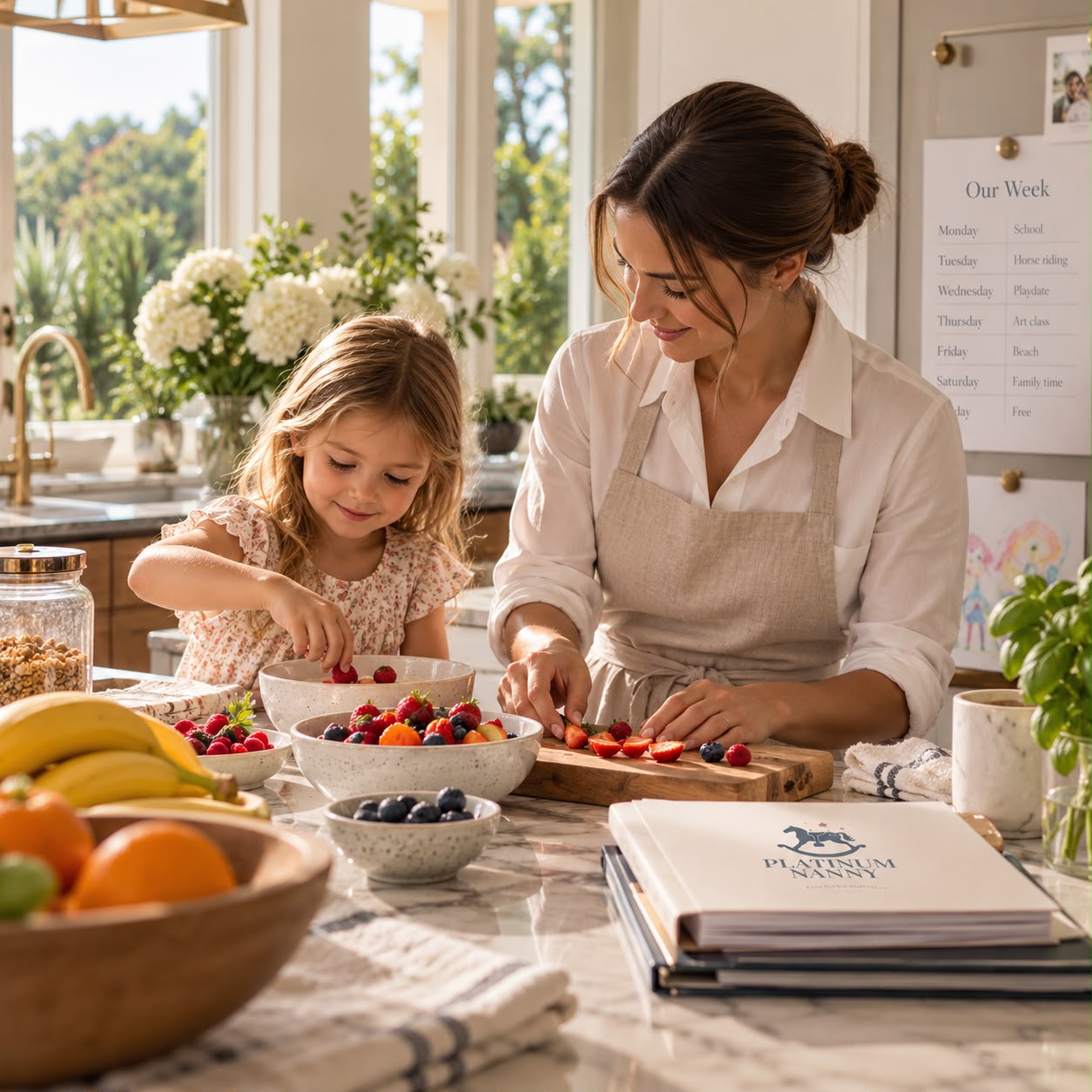
3. Meals, Snacks, Allergies and Food Preferences
Food is another area where every household is different.
Some families have very relaxed mealtimes, while others prefer a clear routine. Some encourage children to eat exactly the same meals as their parents, while others have separate children’s menus.
Let your nanny know what works in your home.
You might include usual breakfasts, favourite snacks, foods you prefer to limit, whether treats are reserved for particular occasions and what your expectations are around trying new foods.
If a private chef prepares the children’s meals, explain how the nanny and chef normally work together.
Most importantly, allergies, intolerances, medication and any essential dietary information should always be clearly documented rather than relying solely on a conversation.
4. Bedtime and Evening Routines
For many children, bedtime is wonderfully predictable.
There might be a favourite book, a certain night light, a glass of water beside the bed or a much loved teddy who absolutely must be found before anyone can contemplate going to sleep.
Include the routine your child knows and loves.
If there are different routines during the week and at weekends, write those down too.
Bedtime is often one of the moments when children particularly appreciate familiarity, especially when parents are travelling or the nanny is responsible for the evening.
Recreating those familiar little rituals can help children feel secure and relaxed.
____
5. Your Approach to Boundaries and Behaviour
Every family has its own parenting style.
What happens when somebody refuses to put their shoes on for school? How do you approach tantrums? What are the rules around treats, homework, manners, pocket money or staying up late?
There is no universal answer.
What matters is that the important adults in a child’s life understand the approach the parents would like followed.
Explain what is particularly important to you and where there may be room for flexibility.
Children usually respond well when the messages they receive from parents and nanny are consistent, and your nanny will feel much more confident knowing how you would like everyday situations handled.

6. School, Activities and Your Child’s Social Life
Modern family diaries can become impressively complicated.
Between school, ballet, football, tennis, music lessons, tutors, playdates and birthday parties, even the best memory sometimes needs a little assistance.
Include the practical information your nanny is likely to need, such as school collection arrangements, regular activities, useful addresses and relevant contact details.
It is also worth noting who is authorised to collect the children.
You may want to explain how much freedom your nanny has to organise activities herself.
Can she arrange a playdate? Book a riding lesson? Invite a school friend home? Take the children swimming spontaneously on a sunny afternoon?
Giving a professional nanny an appropriate level of autonomy can make family life wonderfully easy, but it helps enormously when everyone understands where those boundaries sit.
____
7. How You Like to Communicate
Communication styles vary almost as much as families do.
Some parents love photographs and little messages throughout the day. Others prefer to concentrate on work and receive a short update later unless something requires their attention.
Tell your nanny what suits you.
You might like a quick message after school collection, a photograph from an outing or simply a short conversation when you arrive home.
It is equally important to explain what you would always want to know immediately.
In larger private households, you may also have a Personal Assistant, House Manager or Family Office involved in certain arrangements. Make it clear who the nanny should contact for different matters so that communication remains simple and efficient.
____
8. How Your Household Works
A nanny joining a staffed private residence is becoming part of a wider household team.
A few simple explanations at the beginning can make everyone feel more comfortable.
Introduce the people she will work alongside and explain their responsibilities.
The private chef may manage children’s meals. A driver may organise school transport. The House Manager might coordinate suppliers and household logistics, while the Personal Assistant manages travel arrangements.
Your nanny should know who to approach when she needs something and how communication usually flows within the home.
Good household teams tend to work beautifully when roles are clear and everyone respects one another’s responsibilities.
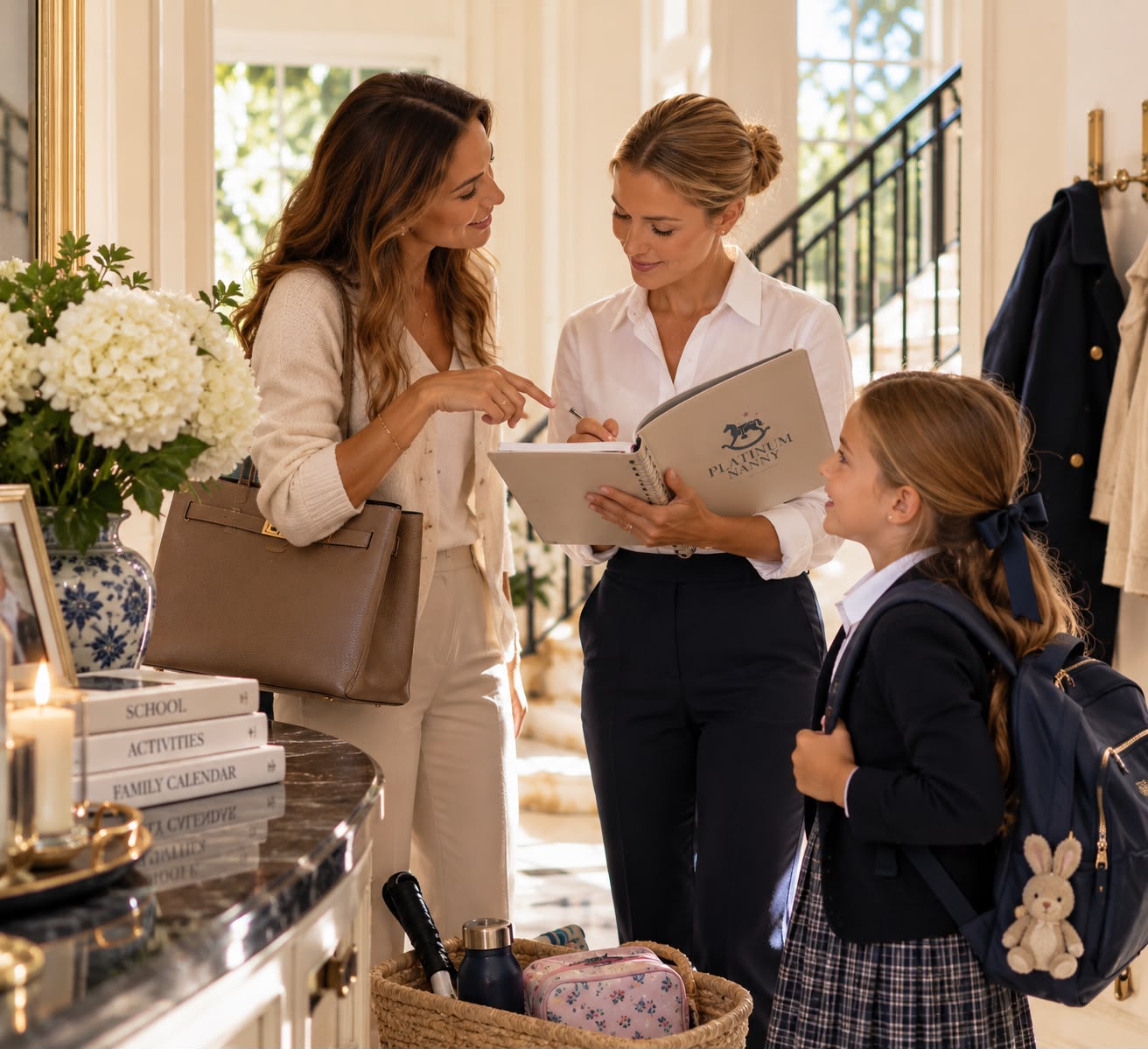
9. Different Homes and Family Travel
For international families, home may mean more than one place.
Your children might spend the school year in London or Monaco, summers on the Mediterranean, weekends in the countryside and part of the winter in the mountains.
Each residence can have its own rhythm.
Perhaps breakfast works differently at the holiday house. The children’s bedrooms may be on another floor. There may be different drivers, security arrangements or local activities.
Adding a simple section for each property can be extremely helpful.
Travel routines are worth including too.
Which comfort toys travel in hand luggage? Who keeps the passports? What does your child like to eat before a flight? What should always be packed for the first night?
Experienced travelling nannies become exceptionally good at anticipating these things, but understanding your family’s own preferences makes the entire process smoother.
____
10. The Little Things That Make Your House Feel Like Home
This is perhaps our favourite part of a nanny handbook.
Include the things that would never appear in a formal job description but matter enormously to your family.
Perhaps Saturday morning means pancakes.
Maybe Grandma is always called on a Sunday evening.
Perhaps your daughter chooses tomorrow’s outfit before she goes to bed, your son insists on carrying his own school bag, or everybody removes their shoes before entering the sitting room.
There may be family traditions, funny expressions, favourite cafés or little routines that have developed over the years.
These details allow a nanny to understand something much more important than a timetable.
They help her understand how your family lives.
Should Everything Really Be Written Down?
Of course not.

A nanny handbook should support the relationship, never replace conversation.
Nobody wants to hand a new nanny a hundred page instruction manual on her first morning.
Keep it friendly, useful and easy to update.
Some families create a simple digital document. Others prefer a printed folder kept somewhere accessible in the home. Families with several residences may choose to keep separate information for each property.
The format matters far less than the information being clear.
It is also worth reviewing your handbook occasionally.
Children grow astonishingly quickly. Naps disappear, schools change, new hobbies appear, food preferences evolve and suddenly the child who needed help tying their shoes is travelling independently to an after school activity.
Your handbook should grow with your family.
Helping Your New Nanny Feel at Home
Starting a new private nanny position involves absorbing a great deal of information in a relatively short period of time.
There are new children to get to know, parents to understand, household routines to learn and, sometimes, an entire team of private staff to meet.
Giving your nanny a thoughtful guide to the way your family lives can make those first few weeks considerably easier.
More importantly, it allows everyone to spend less time worrying about the details and more time concentrating on the relationship that really matters.
The one between your nanny and your children.
At Platinum Nanny, we know that no two families are quite the same.
A nanny who is perfect for one household may not necessarily be the right fit for another. Experience and qualifications are important, but so are personality, communication style, flexibility and an understanding of the way your family chooses to live.
That is why we take the time to understand the individual requirements of every household before beginning our search.
Whether you are employing a nanny for the first time, looking for additional support as your family grows, relocating internationally or searching for an experienced professional to join an established private household team, we would be delighted to help.
Platinum Nanny Ltd. specialises in the recruitment of bespoke private staff for VIP families worldwide. Our services encompass a wide range of roles, including professional nannies, maternity specialists, governesses, estate managers, butlers, private chefs, housekeepers, chauffeurs, gardeners and security personnel, all carefully selected to meet the individual requirements of your household.
—-
Looking for the right nanny for your family?
Every household is different, and finding the right nanny begins with understanding yours. Speak to Platinum Nanny about your family’s requirements and let us introduce experienced private childcare professionals carefully selected for your lifestyle and household.
Contact Platinum Nanny Ltd on WhatsApp: +33760038355

