More than sixty years after Mary Poppins first appeared on screen, the world's most famous fictional nanny still represents something surprisingly relevant to modern childcare: children do not need to be sitting at a desk to be learning.
For Mary Poppins, an ordinary outing becomes an adventure. A household task becomes a game. Music introduces language and rhythm. Imagination transforms the everyday world into somewhere children want to explore.
Behind the magic lies an idea that today's Early Years professionals understand very well: *play is one of the most powerful ways young children learn.*
For UHNW families employing an Educational Nanny, this philosophy can be particularly valuable. The modern Educational Nanny is not simply there to entertain a child between lessons, nor to recreate school within the home. Their role is to recognise the learning opportunities that already exist throughout a child's day and use them thoughtfully.
The result is an environment where education can happen almost anywhere.
A Spoonful of Sugar — or Learning Without Realising It
One of the most memorable ideas in Mary Poppins is that an undesirable task can become enjoyable when approached differently.
Modern Educational Nannies use a similar principle, although without the magic.
Young children learn most effectively when they are interested and actively involved. Rather than constantly instructing, a skilled nanny can create opportunities for a child to discover something independently.
Sorting toys can introduce colours, categories and counting.
Preparing fruit together can introduce vocabulary, quantities and different textures.
Getting dressed can encourage independence, sequencing and fine motor skills.
Even tidying a playroom can become an opportunity to practise decision-making and responsibility.
None of these moments needs to be presented as a "lesson".
That is precisely the point.
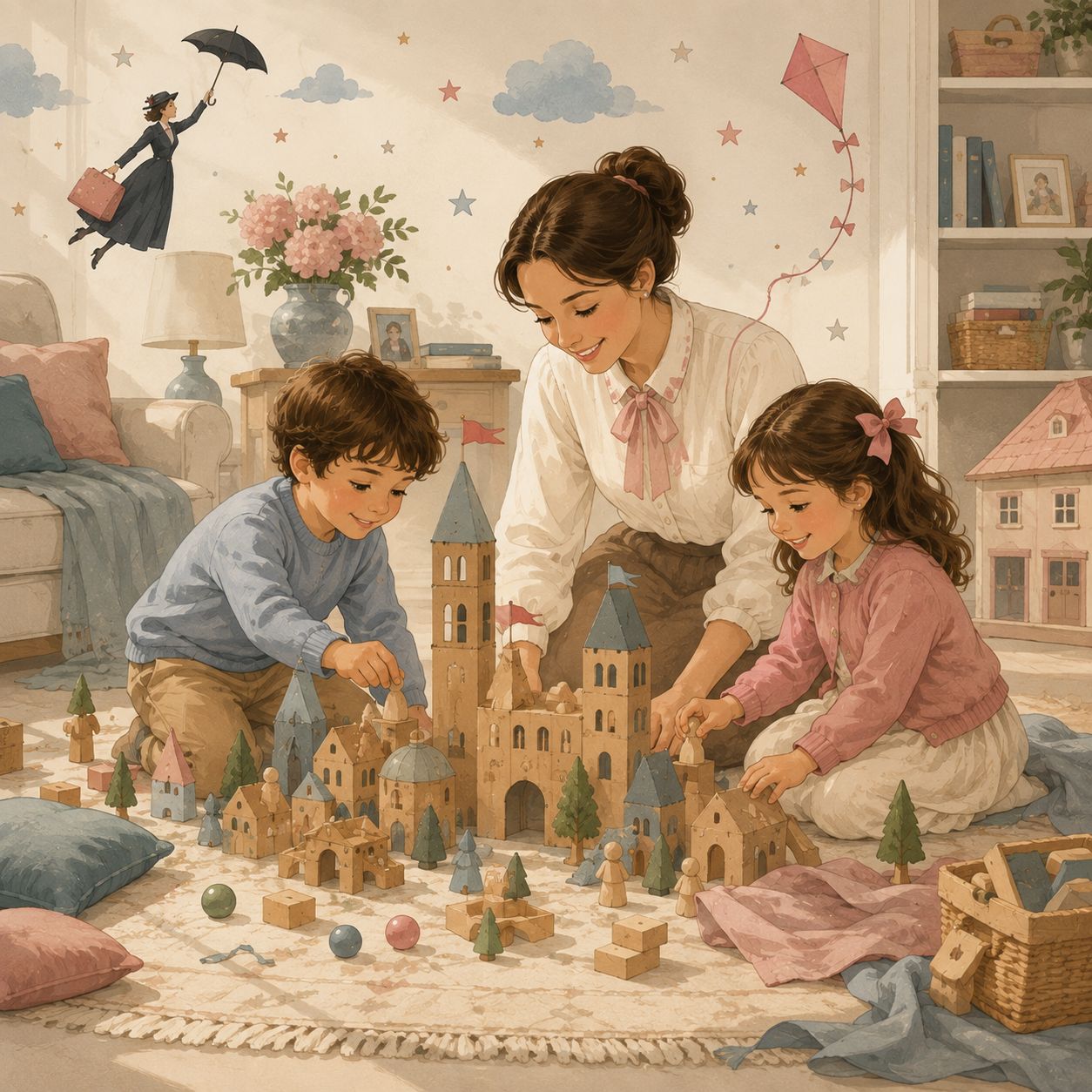
The World Outside the Nursery Is a Classroom
Mary Poppins rarely confines learning to the nursery.
The children explore London, encounter different people and experience situations that encourage curiosity and conversation.
For today's Educational Nanny, outings can provide some of the richest learning experiences available.
A walk through a park can become an opportunity to identify plants, collect leaves, observe insects or talk about the changing seasons.
At the market, a child can count apples, recognise colours, learn the names of unfamiliar foods and interact politely with others.
Museums, libraries, farms, beaches and gardens can all become extensions of the child's learning environment.
For internationally mobile families, the opportunities are even greater.
Children may regularly encounter different countries, languages, foods and cultures. An experienced Educational Nanny can help transform those experiences into meaningful learning rather than allowing travel to become simply a change of location.
Imagination Is Serious Learning
A chalk drawing becomes another world in Mary Poppins.
Children may not literally jump inside their pictures, but imaginative play has an important place in development.
A cardboard box can become a shop, spaceship or house.
A collection of toy animals can inspire conversations about habitats and geography.
A pretend restaurant can introduce numbers, social interaction, vocabulary and turn-taking.
Dolls can become characters through which children explore emotions and relationships.
To an adult watching from across the room, the child may appear simply to be playing.
A skilled nanny sees something else happening.
The child may be experimenting with language, solving problems, negotiating, creating narratives and learning to understand the perspectives of other people.
An Educational Nanny knows when to participate, when to introduce a new idea and just as importantly when to step back and allow the child to lead.
Conversation Is One of the Most Powerful Educational Tools
Mary Poppins constantly talks with Jane and Michael rather than simply talking at them.
This distinction matters.
A child's language development is supported by meaningful interaction throughout the day.
An Educational Nanny might ask:
"What do you think will happen if we add water?"
"Why do you think that bird is building a nest?"
"How could we make the tower stronger?"
"What was your favourite part of the story?"
These questions encourage children to think, explain, predict and express opinions.
For bilingual and multilingual UHNW households, everyday conversation can become particularly valuable.
A nanny who speaks another language may introduce it naturally through songs, stories, routines and play rather than relying solely on formal lessons.
Over time, language becomes part of the child's environment rather than another subject to study.

Books Should Lead Somewhere
Reading with children is an obvious educational activity, but the experience does not need to end when the book closes.
A thoughtful Educational Nanny can extend a child's favourite story into the rest of the day.
A book about dinosaurs might lead to building a dinosaur habitat.
A story about space could inspire making planets from craft materials.
A book about gardening might be followed by planting seeds and watching them grow.
A story involving another country could introduce its food, music or language.
This approach helps children make connections between ideas.
It also allows the nanny to follow the child's interests rather than imposing an entirely adult-designed programme.
Everyday Independence Is Education Too
Educational development is not limited to letters, numbers and school preparation.
Learning to pour a drink, put on shoes, pack a small bag, choose appropriate clothing or help prepare a snack all contribute to a child's growing independence.
These tasks require coordination, planning, concentration and confidence.
For families with considerable household support, this can be particularly important.
When adults are available to do almost everything for a child, there can be a temptation to do exactly that.
An Educational Nanny understands the value of allowing children to try.
The objective is not to make life unnecessarily difficult. It is to recognise when helping too quickly removes an opportunity for the child to develop a skill.
Sometimes excellent childcare means knowing when *not* to intervene.
Following the Child, Not Creating a Miniature School
There is an important distinction between an Educational Nanny and a private teacher.
Parents sometimes hear the word "educational" and imagine structured lessons, worksheets and a timetable filled with academic activities.
For young children, this is rarely the objective.
An Educational Nanny can observe what currently interests the child and introduce opportunities that build upon that curiosity.
A child fascinated by construction vehicles might count diggers, learn their different names, build roads in the sand and read books about construction.
A child interested in cooking might measure ingredients, learn where foods come from and practise following simple instructions.
The educational content is present, but the child's curiosity provides the starting point.
Emotional Development Belongs in the Curriculum
One area where modern childcare goes significantly beyond the fictional world of Mary Poppins is our understanding of children's emotional development.
Educational Nannies can help children recognise and communicate emotions, navigate friendships, cope with frustration and develop confidence.
A disagreement during a playdate, for example, does not always require an adult to immediately solve the problem.
With appropriate guidance, it can become an opportunity for children to practise communication, empathy and compromise.
Likewise, losing a game can provide an opportunity to learn how to manage disappointment.
Waiting for a turn develops patience.
Making a mistake and trying again develops resilience.
These skills may be difficult to measure, but they are fundamental to children's development.
The Educational Nanny Within a UHNW Household
Working as an Educational Nanny within a UHNW household can present opportunities that differ considerably from those found in conventional childcare.
Families may travel frequently, employ several household professionals and divide their time between multiple residences.
The nanny may accompany children to museums in London, spend summers beside the Mediterranean or travel with the family during school holidays.
But access alone does not create an educational experience.
The professional makes the difference.
A trip to another country can simply be a holiday, or it can become an opportunity to learn basic phrases in another language, discover local foods, understand traditions and explore geography.
An Educational Nanny helps children engage with the world around them.
At the same time, they provide something particularly important for children whose surroundings frequently change: *continuity*.
The residence may change. The country may change. The schedule may change.
A familiar nanny can help maintain routines, expectations and a sense of security throughout those transitions.
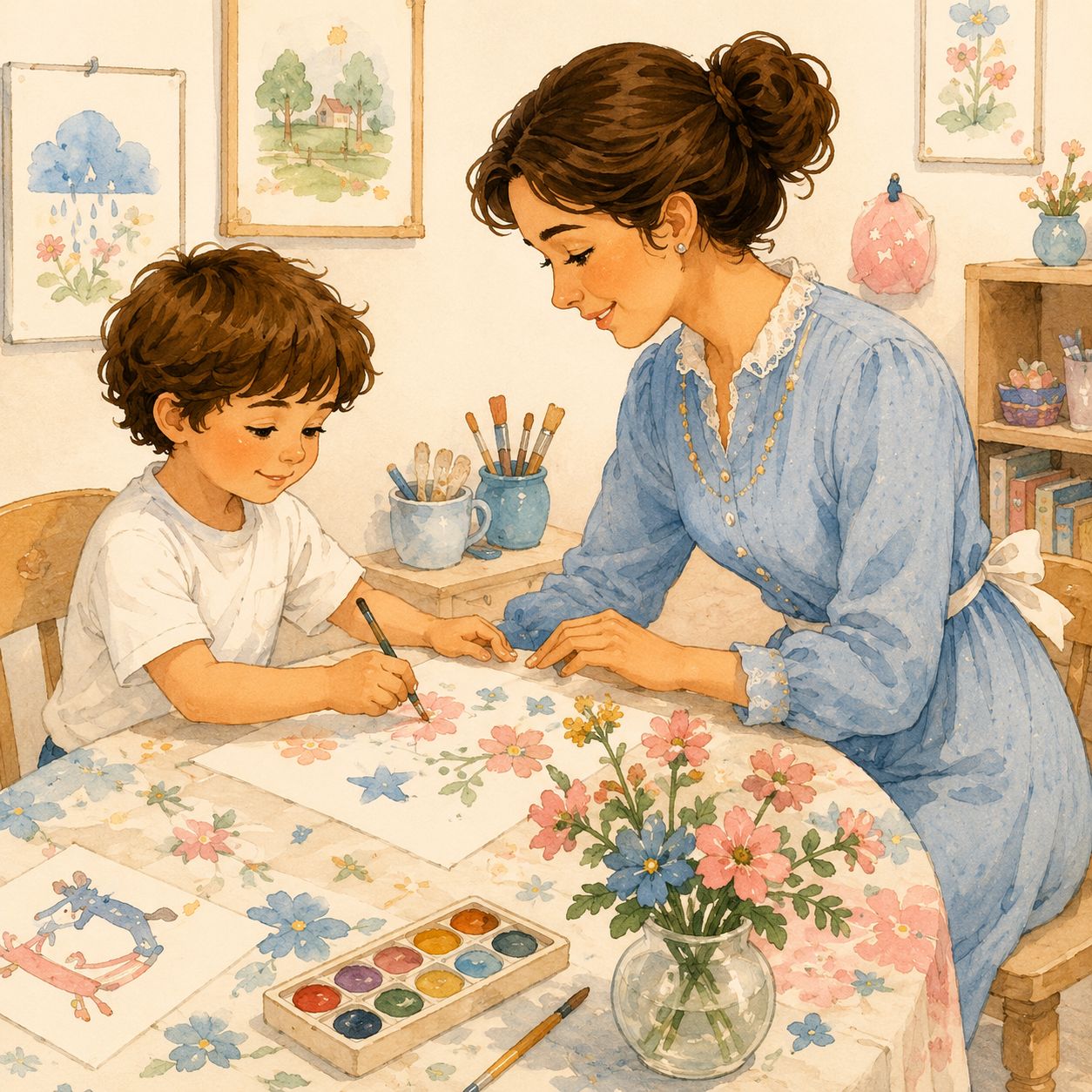
Education Should Complement the Parents
Even the most experienced Educational Nanny is not there to establish an entirely separate philosophy for the child.
Their approach should complement the parents' values and, where appropriate, the child's nursery or school.
Some families prioritise languages. Others value outdoor learning, creativity, sport, independence or academic preparation.
Understanding these expectations from the beginning allows the nanny to create activities and routines that genuinely support the family.
Communication between parents and nanny is therefore essential.
The best educational support feels integrated into family life rather than imposed upon it.
The Modern Mary Poppins?
Today's professional Educational Nanny probably does not arrive with a magical carpet bag.
But many of the qualities that make Mary Poppins such an enduring character remain surprisingly familiar.
She encourages curiosity.
She understands the power of imagination.
She introduces structure without removing enjoyment.
She allows children to experience the world rather than simply telling them about it.
And perhaps most importantly, she understands that children can learn from the ordinary moments surrounding them every day.
Modern Educational Nannies combine that philosophy with contemporary knowledge of Early Years development, safeguarding, communication and age-appropriate learning.
At Platinum Nanny Ltd., we understand that finding the right Educational Nanny involves much more than identifying someone who can organise activities or help with homework. It means finding a professional who understands how children develop, recognises their individual interests and knows how to transform everyday experiences into opportunities to learn.
Because some of the most valuable childhood lessons do not happen behind a desk.
*Sometimes they happen in the kitchen, in the garden, during a story, on a walk — or simply while playing.*
