A practical guide for parents, nannies and governesses
The start of a new school year is an important moment for children of all ages. It brings fresh opportunities, new friendships and the excitement of moving forwards, but it can also involve unfamiliar routines, changing expectations and a little uncertainty.
Whether a child is starting school for the first time, moving into a new year group or joining a different school, thoughtful preparation can make the transition feel much more manageable. Parents, nannies and governesses all play an important role in providing the consistency and reassurance children need.
Here are ten practical ways to help children approach the new school year with confidence.
1. Reintroduce routines gradually
During the holidays, bedtimes, mealtimes and morning routines often become more relaxed. Returning to a school schedule overnight can therefore feel rather abrupt.
In the week or two before term begins, gradually bring bedtime and waking times closer to the usual school routine. Encourage children to get dressed, have breakfast and prepare for the day at a comfortable but realistic pace.
Parents and caregivers should agree on the main elements of the routine so that expectations remain consistent. It does not need to be rigid. A simple structure that suits the household is far easier to maintain than an overly ambitious timetable.
2. Talk through what the new term may bring
Children can feel unsettled when they do not know what to expect. Talking through the school day can make unfamiliar situations seem more approachable.
Discuss practical details such as the journey to school, the collection arrangements and any changes to classrooms, teachers or timetables. If a child is joining a new school, visiting the area or practising the journey beforehand may help them feel more comfortable.
Older children may also appreciate a conversation about new subjects, increased homework or changes in responsibility. Be honest about anything you do not yet know and reassure them that you can find out together.
3. Make space for every feeling
Not every child will feel excited about returning to school. Some may worry about friendships, schoolwork or a new teacher, while others may simply miss the freedom of the holidays.
Rather than immediately trying to solve every concern, begin by listening. Gentle questions such as, “What are you looking forward to?” or “Is there anything you are wondering about?” can open the conversation without placing pressure on the child.
Avoid dismissing worries, even when they appear small from an adult’s perspective. Acknowledging a child’s feelings helps them feel understood and makes it easier to offer calm, practical reassurance.
4. Encourage age-appropriate independence
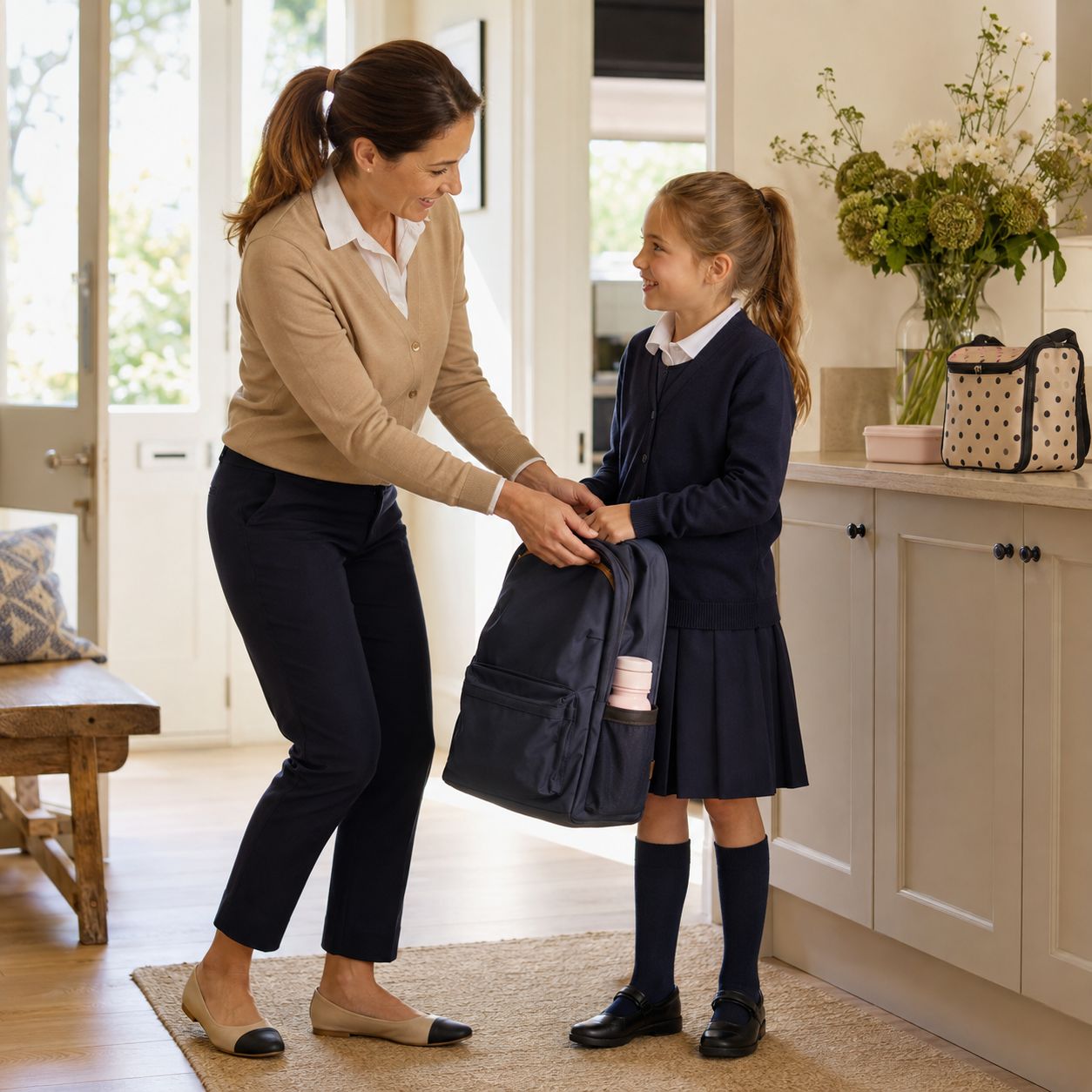
School life involves many everyday responsibilities, from remembering belongings to managing homework and asking for help.
Younger children can practise putting on their shoes, opening their lunchbox or packing their water bottle. Older pupils may take greater responsibility for checking their timetable, preparing sports equipment or organising assignments.
Allow children enough time to try before stepping in. The aim is not perfection, but growing confidence. Notice their effort and offer support when needed, gradually reducing reminders as their independence develops.
5. Prepare school essentials in advance
A rushed search for a missing shoe, book or blazer can quickly create stress at the beginning of the day. Preparing key items the evening before helps mornings feel calmer.
Give school bags, coats, shoes and sports kits a regular place. Check whether the following day includes PE, an after-school activity, a library return or a special event.
Children can take part in this preparation according to their age. A younger child might place their book bag by the door, while an older pupil could work through a short checklist independently. Adults should still oversee important details until the child is ready to manage them confidently.
6. Keep communication between adults clear
Children benefit when the adults supporting them share important information and follow a broadly consistent approach.
Parents, nannies and governesses should agree on who will monitor school communications, organise collections, supervise homework and keep track of activities. A shared calendar can be helpful, particularly in busy households with several children.
Brief handovers can also include changes in mood, tiredness or anything the child has mentioned. Keep observations factual rather than drawing conclusions too quickly. For example, saying, “He seemed quiet after school and mentioned a disagreement at lunchtime,” gives everyone useful information to follow up thoughtfully.
7. Allow time to unwind after school
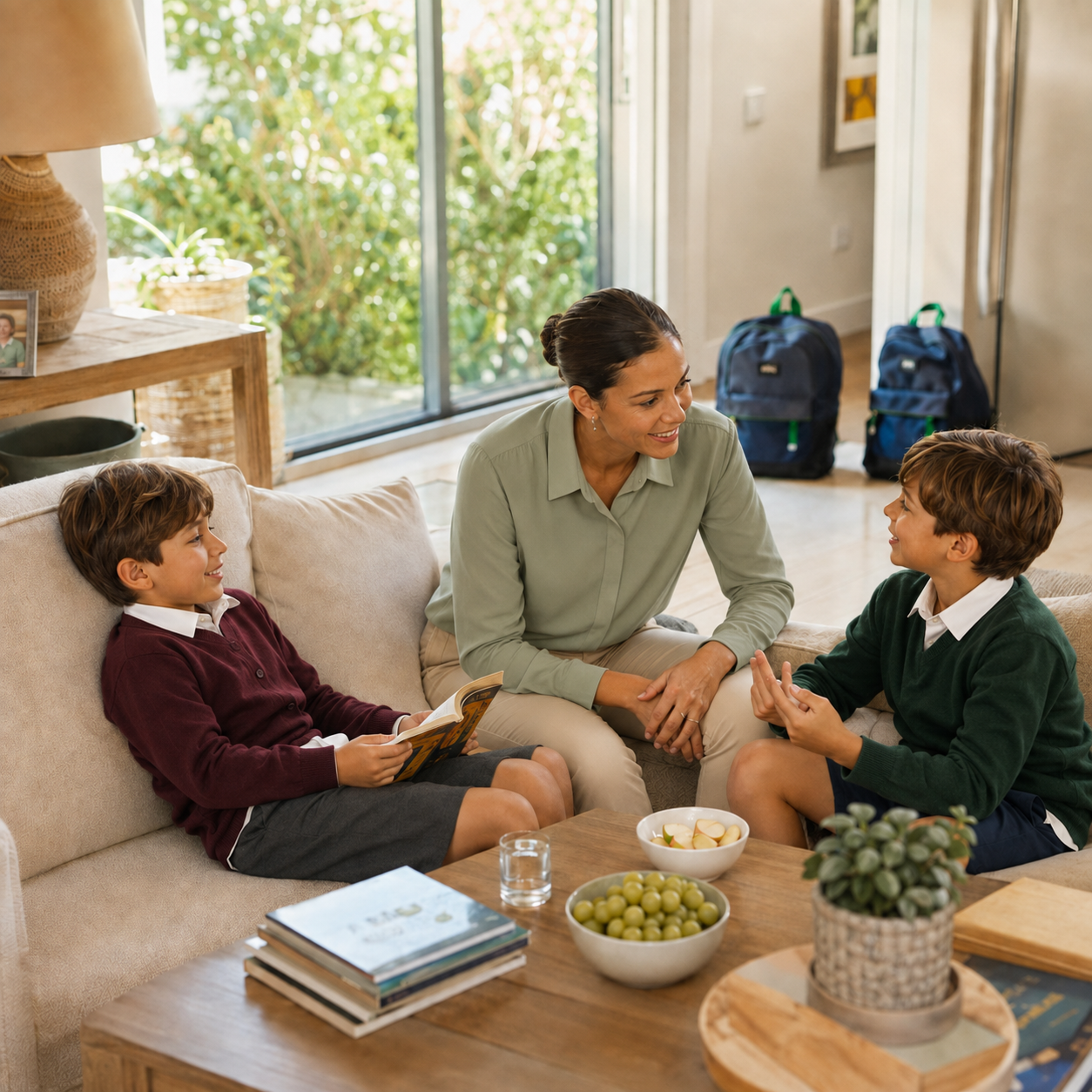
After concentrating, listening and interacting throughout the day, many children need time to decompress. They may not be ready to answer detailed questions as soon as they leave the school gates.
Offer a familiar and unhurried welcome. A snack, a drink and some quiet time may be more helpful than immediately beginning homework or rushing to the next activity.
Follow the child’s cues. Some will want to talk straight away, while others may open up later during play, dinner or the bedtime routine. Where possible, keep the first few weeks of term reasonably spacious while everyone adjusts.
8. Support learning without creating pressure
Learning outside school does not always need to involve worksheets or additional lessons. Reading together, cooking, playing games and discussing everyday events can all reinforce useful skills.
A child might practise measuring ingredients, calculate change in a shop or explain something interesting they learnt in class. Older children may benefit from having a quiet, organised place to study and support with planning larger assignments.
Follow the school’s guidance regarding homework and teaching methods. If expectations are unclear or a child is regularly struggling, contact the teacher rather than allowing homework to become a repeated source of tension.

9. Help children navigate friendships
Friendships are a significant part of school life, but joining groups, handling disagreements and respecting boundaries all take practice.
Talk about simple ways to approach others, include classmates and respond to conflict. Younger children might practise asking, “May I join in?”, while older pupils may need support understanding more complicated social situations.
Avoid placing pressure on a child to find a best friend immediately. Relationships need time to develop. However, repeated exclusion, bullying or a noticeable change in behaviour should be taken seriously and discussed with the school.
10. Review what is working
The beginning of term is an adjustment for the whole household. Even a well-planned routine may need to change once school, homework and activities are fully underway.
Notice and acknowledge small achievements, such as remembering a book, managing a difficult morning or asking a teacher for help. Specific encouragement helps children recognise their own progress.
Parents and caregivers should also review the routine together. If mornings remain rushed, prepare more the evening before. If afternoons feel too busy, consider reducing activities temporarily. Small, thoughtful adjustments are often more effective than attempting to change everything at once.
Beginning the School Year with Confidence
There is no single perfect way to begin a new school year. Every child will respond differently, and some will need more time, reassurance or practical support than others.
A calm routine, clear communication and realistic expectations can provide a strong foundation. When parents, nannies and governesses work together, children are more likely to experience the consistency and security they need at home.
The goal is not to remove every challenge, but to help children feel supported as they face new ones. With patience, encouragement and time to settle, the new school year can become a positive opportunity for learning, confidence and growth.
At Platinum Nanny Ltd., we understand the important role that experienced nannies and governesses play in supporting children’s education, wellbeing and development. We recruit exceptional childcare professionals for private households in the UK and internationally, carefully matching each family with a candidate whose experience, approach and values suit their individual needs.
If you are looking for a professional nanny or governess to support your family throughout the school year, please contact our team to discuss your requirements.
